We have asked Artificial Intelligence to explore space through articles and images. These articles must not be mistaken as peer-reviewed articles and could possibly contain false information, but we hope to bring some valuable insights that you might find interesting.
All images are AI-generated.
Let AI do the reading for you
Or listen to music while you read
The Birth of Everything: Understanding the Big Bang
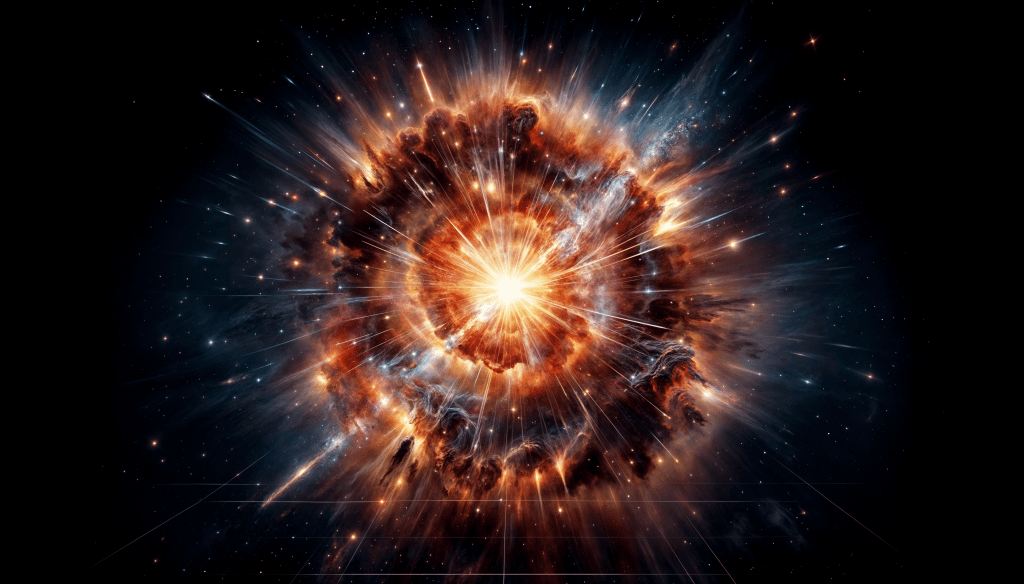
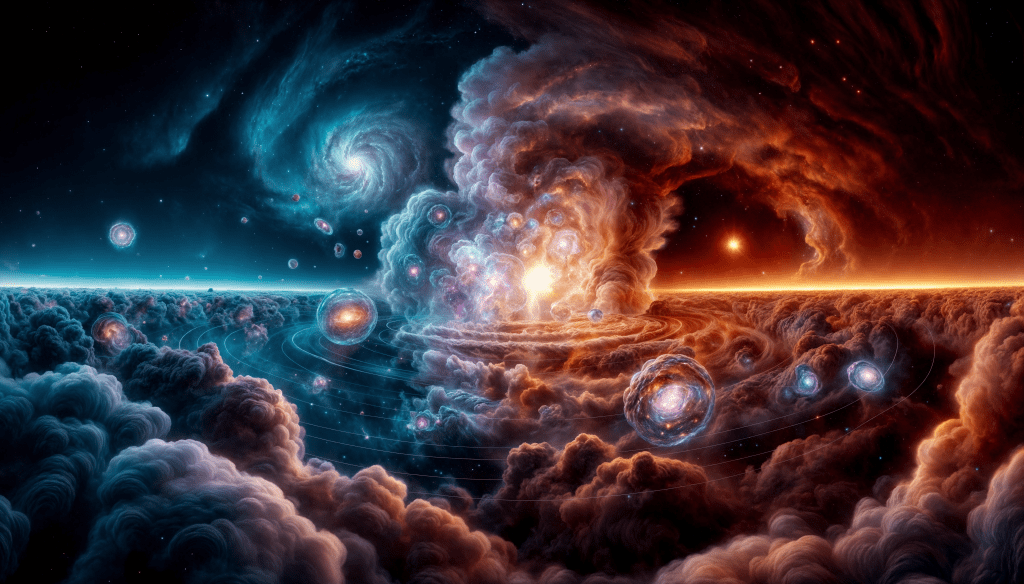
Our cosmic journey begins with a look into the very instant that set everything in motion—the Big Bang. About 13.8 billion years ago, what was once a singular, extraordinarily dense and hot point exploded, expanding and cooling to form the universe as we know it. This moment wasn’t just an explosion but an expansion of space itself, spreading matter and energy into the vast, empty voids of the cosmos.
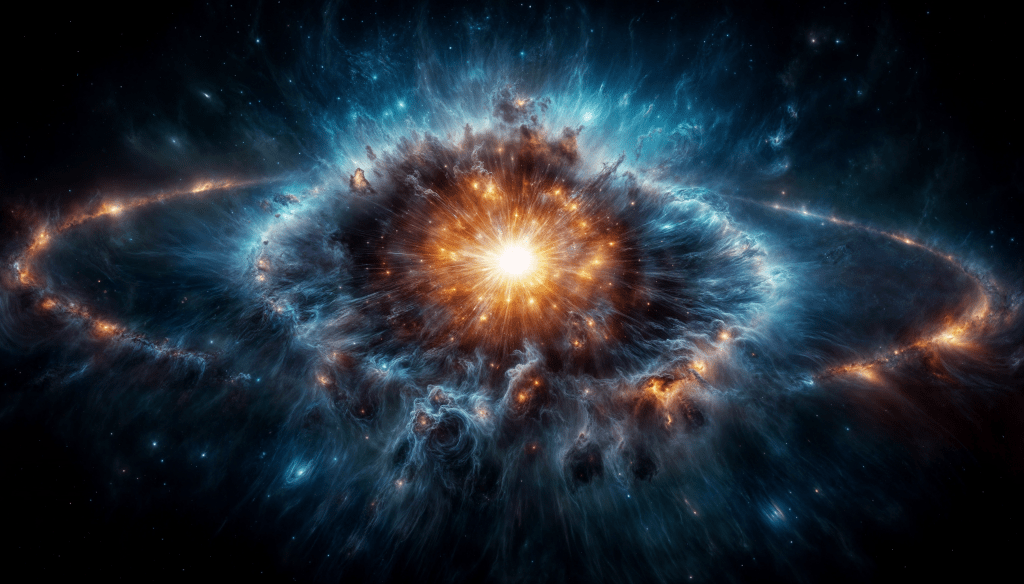
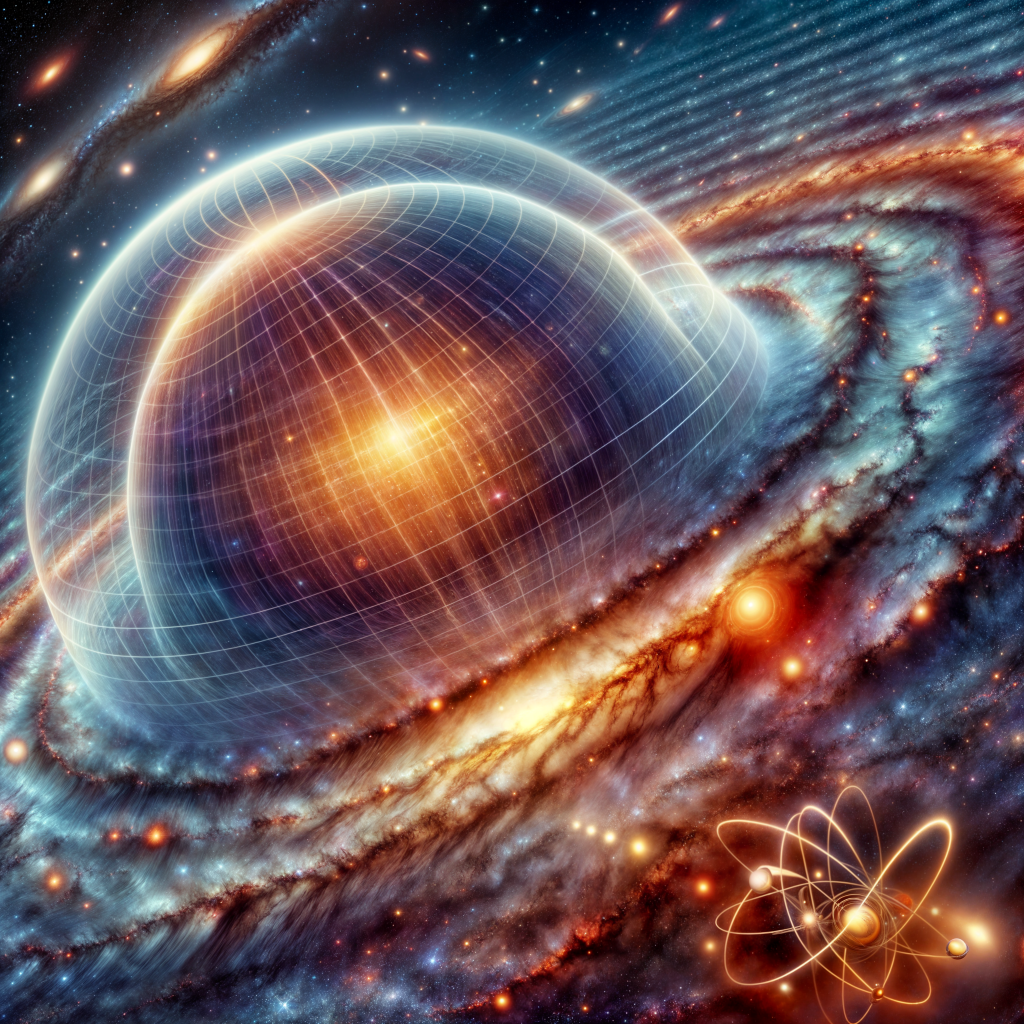
The Big Bang theory is underpinned by several pivotal hypotheses and observations. At its heart lies the theory of general relativity, which helps us understand gravitational phenomena across the cosmos. The theory posits that the universe started from a state of incredible density and has been expanding ever since. Observations of distant galaxies moving away from us at speeds proportional to their distances support this view. This discovery, first made by Edwin Hubble, suggests that the universe itself is stretching and carrying galaxies with it.
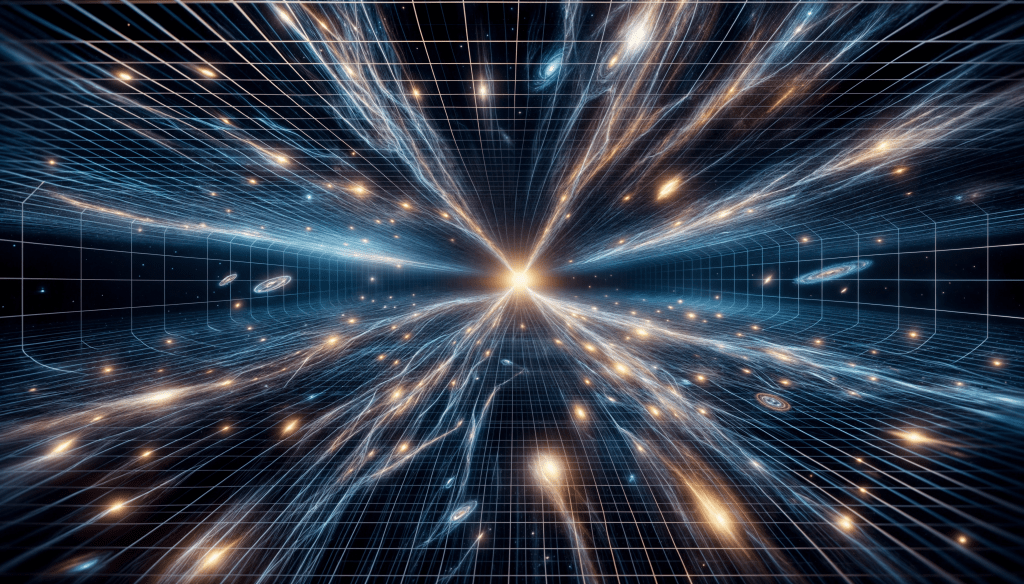
As the universe expanded, it cooled, allowing the first particles of matter to form and then fuse into simple elements like hydrogen and helium—most of which were created during the first few minutes post-Big Bang in a process called nucleosynthesis. The presence of these light elements, predicted by the Big Bang theory, has been consistently observed across the universe.
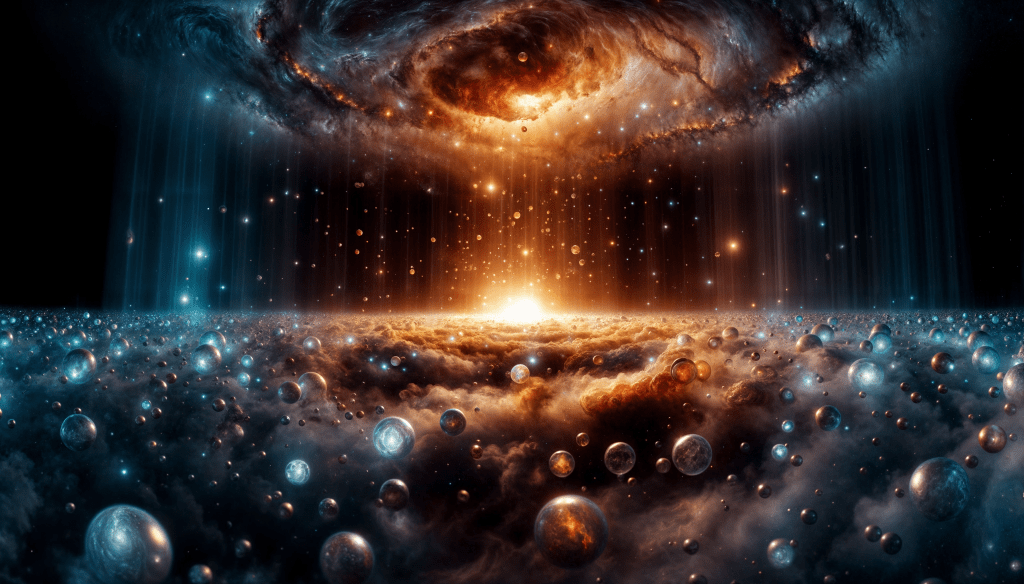
Yet, the Big Bang theory is not without its challenges and mysteries. For instance, it relies on assumptions about the uniformity of the universe and its large-scale structure that cannot be directly observed from our position within it. Moreover, while the theory explains many aspects of the early universe, it also opens up questions about what preceded the Big Bang, the nature of dark matter and dark energy, and how these fit into the broader physics governing everything we observe.
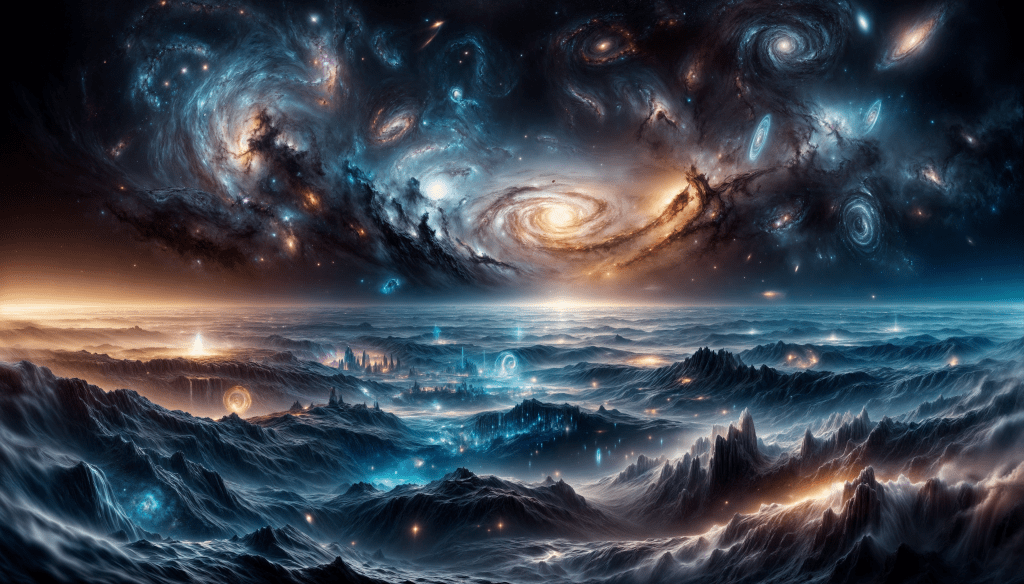
Now that we’ve glimpsed the fiery origins of the universe, let’s examine the evidence supporting the Big Bang theory and the key figures who have contributed to its development.
Cosmic Microwave Background (CMB)
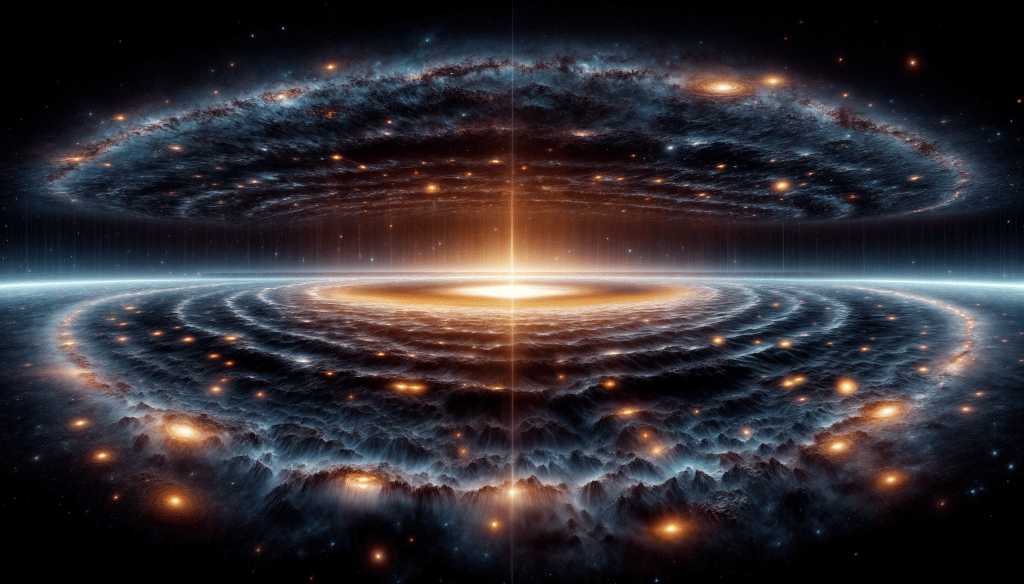
One of the most compelling pieces of evidence for the Big Bang is the discovery of the Cosmic Microwave Background (CMB). This faint glow, detected in every direction we look, is the afterglow of the initial explosion, now cooled to just a few degrees above absolute zero after billions of years of cosmic expansion. The uniformity of the CMB across the sky is a powerful testament to the idea that the universe started from a hot, dense state and has been expanding ever since. Tiny fluctuations in the CMB also give us clues about the distribution of mass in the early universe, influencing the formation of galaxies.
Redshift of Galaxies
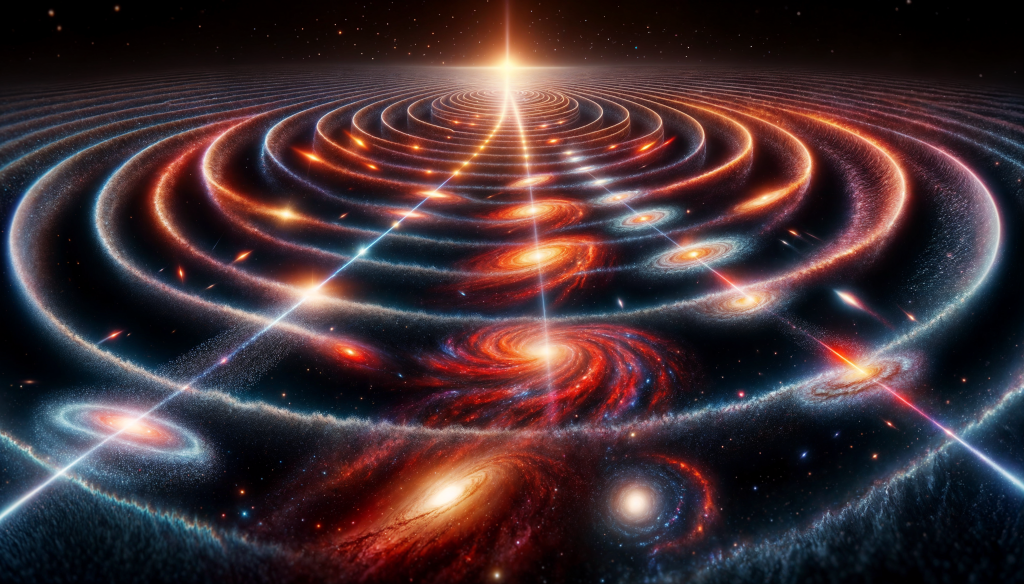
Edwin Hubble’s observations in the 1920s provided the first hints of an expanding universe. By measuring the redshift of galaxies—where light from objects moving away from us shifts to longer, redder wavelengths—Hubble discovered that galaxies are retreating from us in all directions. This universal expansion is a cornerstone of the Big Bang theory and helps us understand the dynamic nature of the cosmos.
Abundance of Light Elements
The proportions of hydrogen, helium, and other light elements observed throughout the universe strongly support the predictions made by the Big Bang nucleosynthesis model. These elements were formed in the first few minutes of the universe’s existence, when conditions were just right for their creation. The consistency of these elemental abundances further validates the theory.
The Role of Pioneering Scientists
Several scientists have been pivotal in the development of the Big Bang theory. Georges Lemaître, a Belgian physicist and priest, first proposed the idea of an expanding universe in 1927, which laid the groundwork for what would become known as the Big Bang theory. His hypothesis was initially met with skepticism but gained considerable support after Hubble’s discoveries.
The journey from a controversial hypothesis to a widely accepted theory was marked by numerous discoveries and advancements. From the formulation of general relativity by Albert Einstein, which provides the mathematical underpinnings for the theory, to the accidental discovery of the CMB by Arno Penzias and Robert Wilson in 1965, each step has added depth to our understanding of the universe’s earliest moments.
The Big Bang theory continues to be refined as new observations are made and new technologies are developed. This ongoing process ensures that our cosmic model remains robust and reflective of reality.
Unraveling Cosmic Mysteries: Challenges and Future of the Big Bang Theory
As we continue our exploration of the universe’s beginnings, it’s crucial to address the challenges and unanswered questions that persist in the Big Bang theory. Despite its strong support from observational evidence, the theory isn’t without its controversies and areas of active research.
The Horizon Problem
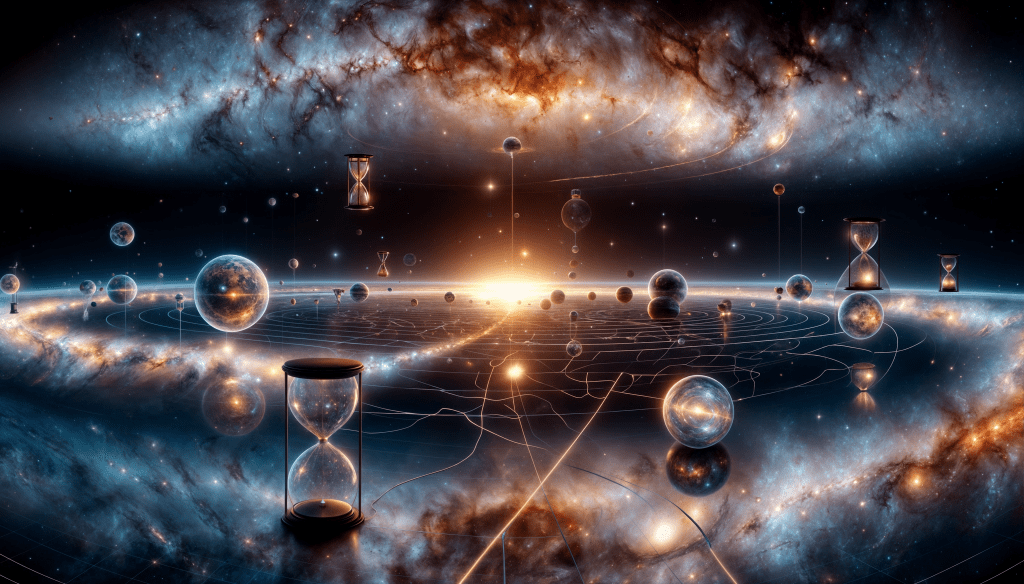
One of the lingering puzzles in the Big Bang model is the horizon problem. This issue arises from observations showing that regions of the universe billions of light-years apart have nearly identical cosmic microwave background temperatures. This uniformity is puzzling because, according to the Big Bang theory, there hasn’t been enough time since the beginning of the universe for light (or any other information) to travel between these distant parts to equalize their temperatures.
The Flatness Problem
Another significant challenge is the flatness problem, which questions why the universe appears to be so close to perfectly flat. Measurements of the universe’s total density find it to be remarkably close to the critical density, which determines a flat universe. This precise balance raises questions about the initial conditions of the early universe—conditions that seem too finely tuned to be a coincidence.

Inflation Theory
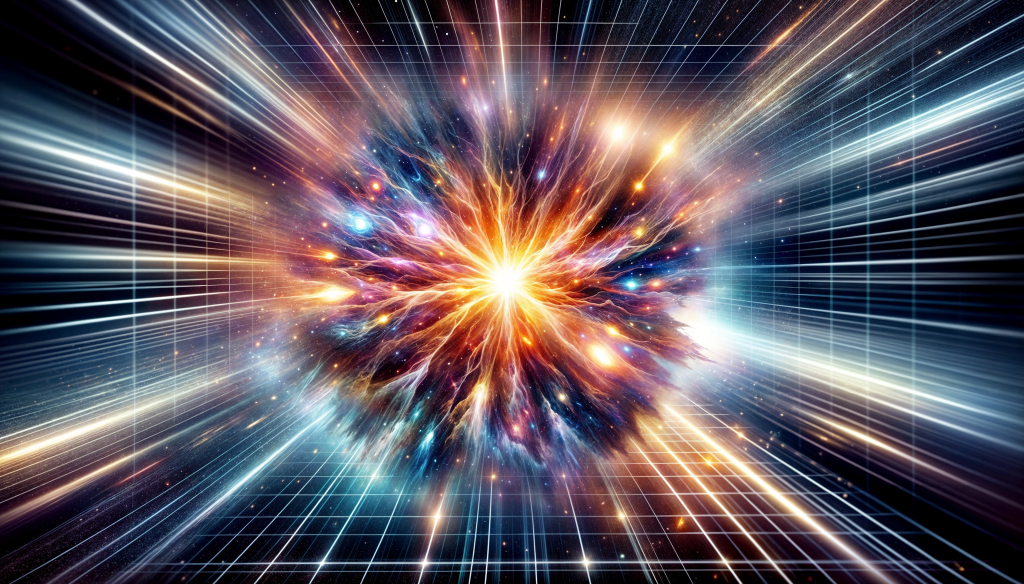
To address these and other issues, the concept of cosmic inflation was proposed. This theory suggests that there was a brief period immediately after the Big Bang during which the universe expanded exponentially at a pace much faster than the speed of light. This rapid expansion could explain the uniformity of the CMB across vast distances and why the universe appears flat. However, the mechanisms driving inflation and its implications are still areas of active investigation and debate.
Dark Matter and Dark Energy
The Big Bang theory also intersects with other mysterious aspects of the universe: dark matter and dark energy. These components are thought to make up about 95% of the total mass-energy content of the universe, yet they do not emit light or energy that we can currently detect. Understanding these elusive substances could lead to profound insights into the nature of the universe and the validity of our current cosmological models.
Looking Ahead
As technology advances, so does our ability to probe deeper into the universe’s mysteries. Future observations, such as those from the James Webb Space Telescope and other advanced observatories, are expected to provide new data that could confirm, refine, or even challenge the Big Bang theory. With each discovery, we come closer to understanding not only the origins of the universe but also the fundamental laws that govern it.
The journey through cosmic history is far from over. Each discovery peels back a layer of mystery, offering a glimpse into the profound and sometimes perplexing nature of our universe. As we stand on the precipice of new discoveries, the story of the Big Bang continues to evolve, reminding us that the universe is a far stranger and more wonderful place than we could have ever imagined.

 Digital Domination