We have asked Artificial Intelligence to explore space through articles and images. These articles must not be mistaken as peer-reviewed articles and could possibly contain false information, but we hope to bring some valuable insights that you might find interesting.
All images are AI-generated.

Let AI do the reading for you
Or listen to music while you read
The Cosmic Ballet of Galaxy Formation
Galaxy formation is a saga that unfolds over billions of years, beginning with minor fluctuations in the density of the universe shortly after the Big Bang. These initial perturbations grew under the influence of gravity, leading to the formation of the first structures in the universe.
The Role of Dark Matter
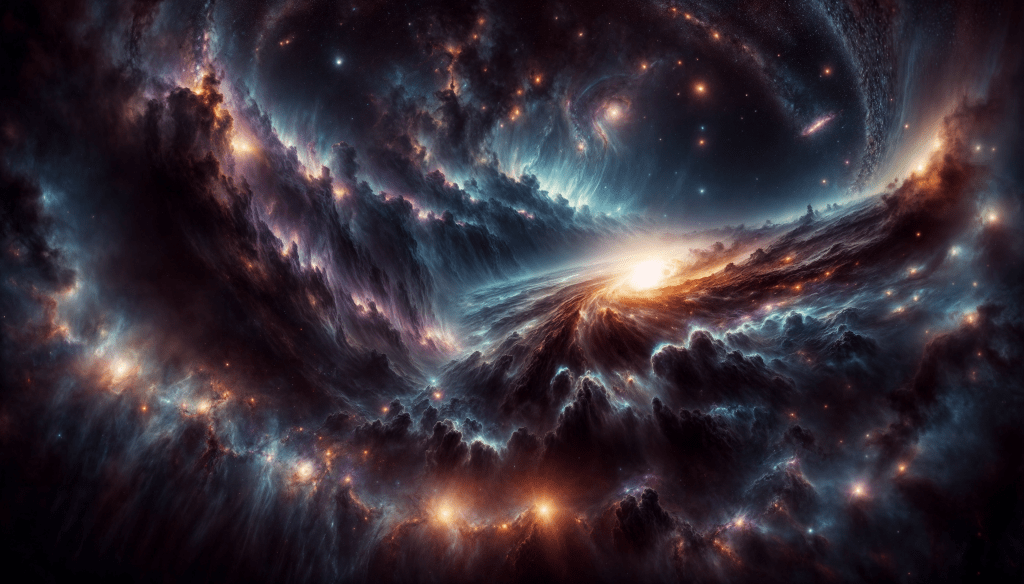
The consensus among astronomers is that dark matter plays a crucial role in galaxy formation. Although invisible, dark matter makes up about 85% of the universe’s total mass and acts as the scaffolding on which galaxies are built. As dark matter clumps together under gravity, it pulls in regular matter—gas and dust—creating the foundation for galaxies. The 2MASS Redshift Survey, which mapped galaxies in three dimensions, highlights how these structures trace the web of dark matter throughout the universe (Harvard Center for Astrophysics).

Gravity and Gas Dynamics
As the universe expanded, regions denser in matter started to collapse under their own gravity, forming the first protogalaxies—clouds of hydrogen and helium. Over time, these gas clouds cooled and settled into spinning disks. This process was influenced by the angular momentum of the collapsing gas clouds, as seen in both observations from the Hubble Space Telescope and the latest data from the James Webb Space Telescope (Harvard Center for Astrophysics) (Nature).

The Formation of Galactic Structures
Theories of galaxy formation have evolved over time. The classic monolithic collapse model suggested that galaxies formed in a single, massive collapse of gas. However, more recent theories, supported by observations from telescopes like the James Webb, propose a hierarchical buildup where small protogalaxies merge over time to form the larger galaxies observed today. This «bottom-up» model of galaxy formation aligns with the observed large-scale structure of galaxies that often appear in groups and clusters, connected by filaments of dark matter and gas (Astronomy Magazine).

These fundamental processes set the stage for the next chapter in cosmic evolution: the birth of stars within these nascent galaxies. By understanding these mechanisms, we gain insight into not only how galaxies like our Milky Way came to be but also the dynamic processes that continue to shape them.

Star Formation Across the Ages
Once galaxies begin to take shape, the next chapter in our cosmic story—star formation—commences. This process, critical to the evolution of galaxies, occurs when regions within these massive gas clouds become unstable and collapse under their own gravity.

Cloud Collapse and Star Birth
The birth of a star begins within dense regions of a galaxy’s interstellar medium, where clouds of hydrogen and other gases, mixed with dust, become gravitationally unstable. Triggered by disturbances such as the shock waves from nearby supernovae or the gravitational tug from nearby massive objects, these clouds begin to collapse. As the cloud collapses, its core heats up until nuclear fusion ignites, marking the birth of a new star. This phase is vividly captured in observations from telescopes like the James Webb, which provides a clearer view of these early stages than ever before (NASA Science) (AAS Nova).

From Protostars to Main Sequence Stars
As the collapsing gas cloud, or protostar, continues to gather mass from its surrounding envelope, it grows hotter and denser. When the core’s temperature reaches about 10 million degrees Celsius, hydrogen atoms begin to fuse into helium, releasing energy in the process known as nuclear fusion. This energy output eventually halts the collapse of the cloud, and the star reaches what is known as the main sequence phase of its life, where it will spend most of its existence, stably burning hydrogen into helium (PhysSciTech).

Stellar Nurseries and Feedback
Regions of space where stars form, known as stellar nurseries, are often highlighted in spectacular images from space telescopes. These regions are not only cradles of star birth but also zones of active feedback. Young stars emit intense radiation and stellar winds that can blow away the surrounding gas, potentially quenching further star formation or triggering the birth of new stars by compressing nearby gas. This complex interplay of creation and destruction is a key aspect of galactic evolution and star formation theories (AAS Nova).

The lifecycle of stars is a cornerstone of cosmic evolution, influencing the structure of galaxies and the distribution of elements essential for life as we know it. As stars evolve and eventually die, they recycle their material back into the interstellar medium, seeding future generations of stars with heavier elements formed in their cores.

Modern Observations and Theories
The advent of advanced space telescopes like the James Webb Space Telescope (JWST) has revolutionized our understanding of galaxies and star formation. These modern observatories provide not just more data but also deeper insights into the mechanisms that drive the cosmos.
James Webb Space Telescope Revelations
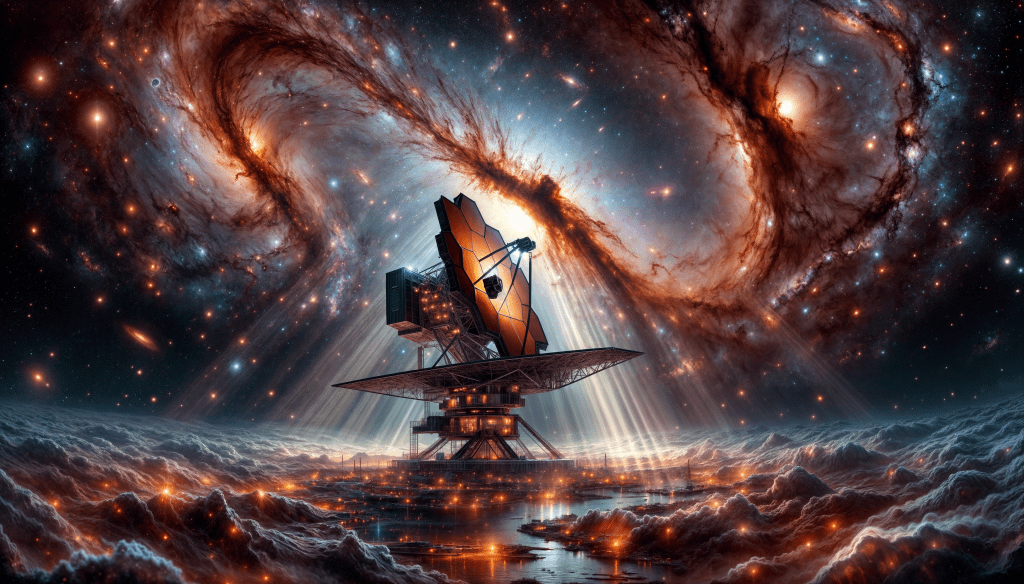
The JWST, with its powerful infrared capabilities, allows astronomers to peer through dust clouds that obscure visible light, revealing the intricate processes occurring in the early universe and within star-forming regions of galaxies. Recent observations have shown detailed structures of distant galaxies, providing evidence of the dynamics of galaxy formation and the early stages of star birth (NASA Science) (Nature). These observations help confirm theories about how galaxies evolve and interact, including insights into galaxy mergers and the role of black holes in galactic centers.
The Impact of Technology on Understanding
The technological advancements embodied by the JWST and other instruments like the Chandra X-ray Observatory and the Hubble Space Telescope complement each other, offering a multi-wavelength view of the universe. This holistic approach allows scientists to see the effects of phenomena like black hole activity and stellar winds across different energy spectrums, providing a fuller picture of the processes that shape galaxies (PhysSciTech) (AAS Nova).
Theoretical Advances
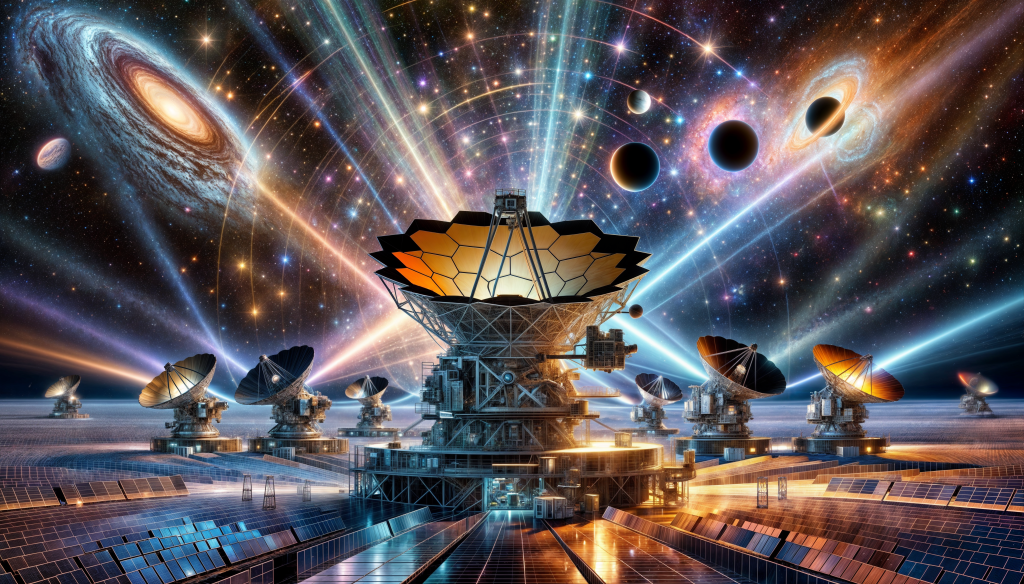
With enhanced observational data, theoretical models of galaxy formation have become more sophisticated. Theories now incorporate complex simulations of dark matter interactions, the behavior of interstellar gas, and the feedback mechanisms from stars and black holes. These models are crucial for predicting how galaxies will continue to evolve and how they interact with the cosmic web of dark matter and energy that fills the universe (Harvard Center for Astrophysics) (Astronomy Magazine).

Unanswered Questions and Future Directions
Despite the leaps in understanding, many questions remain. For instance, the exact role of dark matter in galaxy formation and the details of star formation in different galactic environments are still under active study. Future missions and ongoing research aim to address these mysteries, pushing the boundaries of what we know about the cosmos.

Implications for the Future
As we continue to advance our understanding of the cosmos, the formation of stars and galaxies not only enriches our knowledge of the universe but also has profound implications for future explorations and the broader field of astrophysics.
Cosmological Implications
Understanding how galaxies and stars form is crucial for cosmology—the study of the universe’s origin, structure, evolution, and eventual fate. By examining the processes underlying galaxy formation, scientists can better understand the distribution of galaxies across the cosmos and the evolution of the universe’s large-scale structure. This understanding also informs our comprehension of dark matter and dark energy, which influence the universe’s expansion and fate (Harvard Center for Astrophysics) (Nature).
Astrobiology and the Search for Life
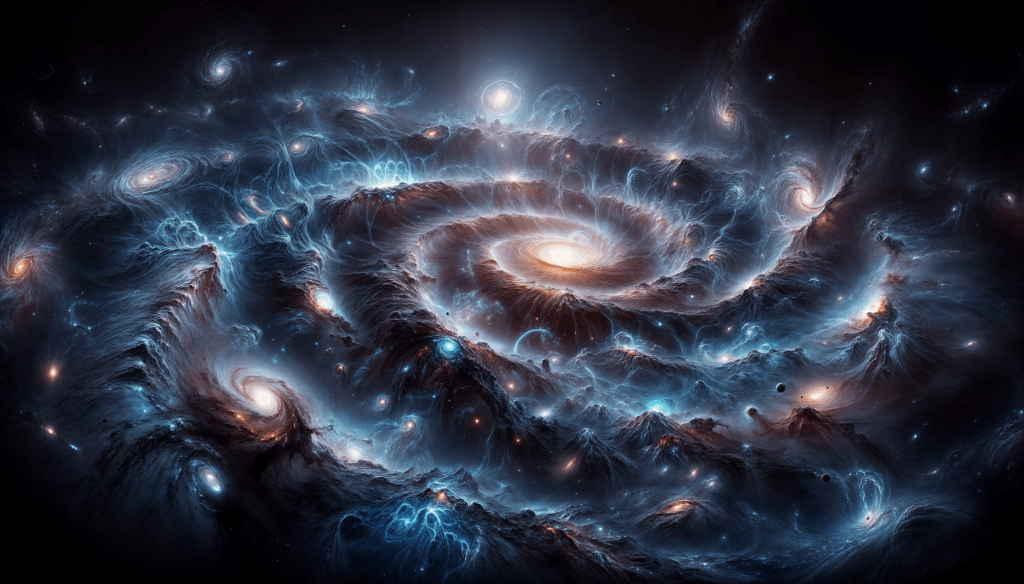
The processes of star and planet formation are tightly linked. By understanding how stars form, scientists also gain insights into the formation of planetary systems around these stars. This has direct implications for astrobiology, the study of life’s potential in the universe. Knowing where and how stars form can help identify the most likely places to find habitable planets (PhysSciTech) (AAS Nova).

Technological Advancements and Future Missions
The technology developed for space telescopes and other astronomical instruments has applications beyond astronomy, including in fields like materials science, imaging technologies, and data analysis. Additionally, the insights gained drive the development of future missions designed to probe the cosmos more deeply or focus on specific questions, such as the presence of life on exoplanets or the nature of dark matter (NASA Science) (Nature).

Educational and Cultural Impact
The quest to understand our universe continues to inspire educational and cultural pursuits. It fuels public interest in science and has become a cornerstone of STEM education, encouraging the next generation of scientists, engineers, and thinkers. The awe-inspiring images and discoveries also enrich our cultural heritage, providing a broader perspective on our place in the universe (Astronomy Magazine) (AAS Nova).


 Digital Domination